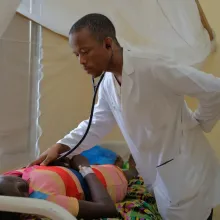

When a patient arrives at an emergency department with severe bleeding, sepsis, or respiratory failure, the first hour can determine whether they live or die. In Liberia, where emergency care resources remain limited, every additional nurse trained to respond to these moments can save countless lives.
Recently, Partners In Health Liberia (PIHL), in partnership with the Maryland County Health Team, celebrated the graduation of six Emergency Nursing Fellows, marking a significant milestone in Liberia’s fight for robust emergency health services. This ceremony, fundamental to the “Strengthening Liberia’s Critical Care & Emergency Health Service Delivery” project, underscores a collective mission to enhance emergency care nationwide, particularly in Maryland County.
“Emergency care is not just about saving lives in the moment—it is about building systems that ensure no one is left behind,” declared Dr. Sarah Anyango, PIHL’s Interim Director of Clinical and Medical Education Services, as she opened the ceremony.
Her powerful words emphasized the need to cultivate a resilient health care system capable of addressing emergencies, igniting hope and urgency among all attendees.
The need for a strengthened emergency care system is crucial. In 2021, only 0.5% of hospitalized patients in Liberia had access to facility-based emergency or critical care, with Maryland County facing significant challenges. In response, PIHL partnered with the Maryland County Health Team to launch an Emergency Nursing Fellowship to train new nurses and enhance the existing group of 12 Critical Care Nursing (CCN) Fellows. This year-long program focuses on essential skills such as managing critically ill patients on ventilators, interpreting diagnoses, performing electrocardiograms (EKGs), and more. These efforts are designed to address critical staffing shortages and strengthen the abilities of health professionals at the James Jenkins Dossen (JJD) Memorial Hospital.

Dr. Sarah Anyango, the interim director of clinical services and medical education services and the maternal health lead at PIH (left), presented a certificate to one of the graduates during the ceremony. Six graduates completed a year-long Emergency Nursing Fellowship program that focused on essential skills, including managing critically ill patients on ventilators, interpreting diagnoses, performing electrocardiograms (EKGs), and more. Photo by Ansumana O. Sesay / PIH.
Keynote speaker Mrs. Henrietta Merriam Carpenter captivated the audience with her address, “The Golden Hour.” She stressed, “time saves lives,”. The first sixty minutes following a critical incident or medical emergency often determines whether patients like Abrahim Silibie survive or suffer permanent complications. Abrahim underwent surgery at the JJD Hospital in Maryland County after suffering a severe head injury from being struck by a falling tree. “Every second counts, every intervention matters, and every life is worth our collective effort,” she urged, inspiring fellows to take their training into action as they prepare to face medical emergencies in their communities.
Class President echoed the sentiment of readiness and commitment:
“We are ready to carry the lessons of the Golden Hour into our hospitals and communities. We are ready to save lives.”
The graduation celebration was not merely about handing out certificates; it signified a commitment to building a health system in which emergency response is swift and effective. Emergency nurses assess critically ill patients, recognize life-threatening conditions, stabilize patients, coordinate rapid treatment, and ensure care begins within minutes.
The newly graduated fellows are set to enhance emergency room capabilities at JJD Hospital, improve infection prevention and control measures at local health centers, and lay the foundation for an accredited Critical Care Nursing program—paving the way toward Universal Health Coverage (UHC) for all in Maryland County.
As applause filled the hall, it resonated not only for the graduates but also for a shared vision: a stronger, faster, and more resilient emergency care system in Liberia. Closing remarks from mentors and health leaders reinforced this collective commitment, reiterating that the graduates’ efforts are part of a larger transformation to ensure no patient loses out on critical care due to preventable delays.
The graduation was more than an event; it represented a promise to the people of Maryland County. For the next patient arriving at JJD Memorial Hospital with severe trauma, septic shock, or respiratory failure, these six graduates may be the difference between life and death. With each fellow prepared to act with skill and compassion, the future of emergency medicine in Maryland County shines with hope.