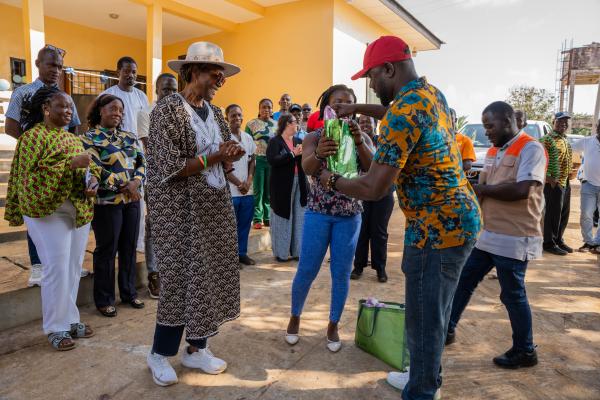
For nearly a decade, Liberia was a place Didi Farmer felt connected to through the stories from the patients and people told by her late husband Dr. Paul E. Farmer.
She finally sets foot on Liberian soil. Traveling to Maryland County, one of the remotest corners of the country, she arrived eager to experience firsthand the realities of global health equity and to see how years of partnership had taken root.
Building a resilient health system in rural Liberia is nothing short of a defiant act against daunting logistical challenges. Didi reflected on her journey, noting that while her arrival was facilitated by a small plane, transporting goods and services remains a formidable challenge.
“It can take up to two days of difficult travel to bring essential supplies from Monrovia to the remote communities of Maryland County,” she observed.
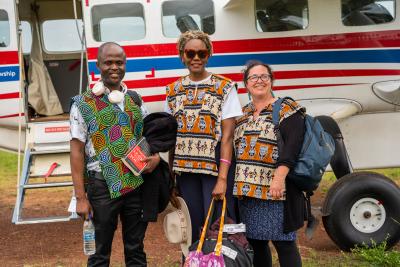
Ms. Wingdie Didi Bertrand Farmer, the widow of the late Dr. Paul Farmer, Co-founder of Partners In Health (PIH), arrived in Harper, Maryland County, southeast Liberia, in October. She was accompanied by the deputy executive director for systems and administration of PIH (right), as well as Cate Oswald, the principal chief program officer of PIH (left). Photo by Ansumana O. Sesay/PIH.
In a region where resources are constrained, and the scars of past outbreaks linger, the challenge goes beyond providing medical care; it hinges on fostering a healthcare system built on communal trust.
A DNA of Collaboration
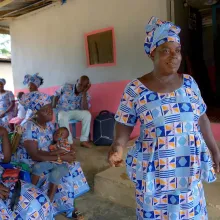
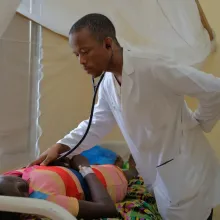
What Didi encountered was not simply a network of clinics but a living blueprint for collaboration. From hospital staff and community health workers to local chiefs and the caretakers of community gardens, she observed an ecosystem defined by shared purpose and mutual accountability.
“It’s really embedded in the DNA of everyone here,” she remarked, highlighting a cohesive team that utilizes creativity and determination to surmount obstacles.
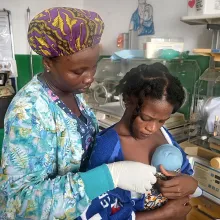
This was not a model driven by top-down charity, but one rooted in local leadership, collective action, and deep community trust. Among the many poignant moments of her trip, a visit to Pleebo Health Center stood out vividly. Here, Didi witnessed 20 to 25 young adolescents accessing family planning services—a scene that sparked deep reflection.
“We want our girls to remain free from unwanted pregnancies. We want our girls to be in the classrooms. We want our girls to complete secondary school and aim for higher education,” she expressed with a sense of urgency.
What struck Didi the most was the community’s proactive embrace of family planning services, a topic often considered taboo in many regions. In Pleebo, however, she witnessed fathers actively supporting their daughters’ decisions to seek family planning care and education. This significant cultural shift left a profound impression on her.
As her visit came to an end, Didi described Liberia as a “beacon of light” - a place that continues to radiate hope despite the immense challenges it faces. As she prepared to return home, she urged others to witness the transformative impact for themselves, declaring, “I will tell them about the level of sunshine and happiness (a slogan specifically used to describe Harper City, Maryland County) that are awaiting them.” Through her experiences in Liberia, Didi Farmer not only witnessed the power of collaboration but also the unwavering spirit of a community determined to thrive against all odds, serving as an inspiring model of health equity as a living, collective endeavor.