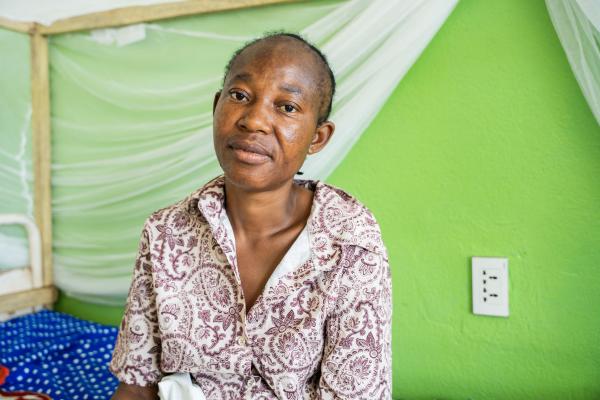
She left the capital in search of answers she could not find at home, uncertain that a rural hospital could succeed where others had failed. Decontee K. Doe, 38, traveled from Monrovia after hearing positive reports about the quality of services, particularly obstetric and gynecological care, at the Partners In Health Liberia-supported James Jenkins Dossen (JJD) Memorial Hospital in Maryland County, rural Liberia. Skeptical at first, Decontee doubted that quality medical services could exist in a rural community like Maryland County.
Her doubts were not unfounded. Liberia faces a staggering shortage of medical professionals. The World Health Organization (WHO) recommends a ratio of 1 physician per 1,000 people, yet Liberia has only 298 doctors, resulting in a dire 1:15,000 ratio. For years, Decontee endured prolonged pain, recurrent pregnancy losses, sexual dysfunction, and secondary infertility. Despite seeking treatment at various hospitals in Monrovia since 2020, her condition remained unresolved—until she arrived at JJD Hospital. There, Decontee was diagnosed with multiple uterine fibroids. Doctors informed her that without surgery, her chances of fertility were nonexistent.
Access to surgical care is critical; treatable conditions, if left unaddressed, can lead to severe health risks or death. Surgeries like cesarean sections significantly reduce maternal mortality, while even minor procedures, such as cleft palate repair, prevent long-term complications. Yet, for women like Decontee, accessing such care often feels like an insurmountable challenge. Nearly 45% of women aged 15–49 in Liberia face barriers to healthcare, with financial hurdles being the most common.
Decontee recalled the high costs she encountered elsewhere, ranging from LRD$52,950 (~$300 USD) to LRD$88,250 (~$500 USD). “The cost was not my concern; my major concern was to get the right doctor to perform the surgery,” she emphasized.
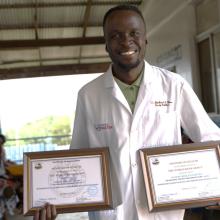
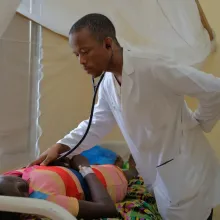
At JJD Hospital, her concerns were finally alleviated. On November 13, 2025, Decontee underwent successful surgery, transforming her life. “I was impressed with what I saw. People from different countries are here in Liberia for treatment,” she remarked, noting the presence of both local and foreign doctors.
This transformation is no coincidence. Prior to PIH’s involvement, 9 out of 10 individuals in Maryland County who needed emergency or life-saving surgeries faced grave risks due to a lack of surgical personnel. Since 2016, PIH, in collaboration with the Maryland County Health Team (CHT), has transformed JJD Hospital, turning it from a medical desert into a national beacon of hope. By maintaining operational readiness and prioritizing high-quality, dignified care, JJD now attracts patients not only from southeastern Liberia but also from Monrovia and neighboring countries like the Ivory Coast.
The impact is indisputable. Between 2019 and 2024, JJD’s emergency room completed 3,581 life-saving surgical and trauma cases. PIH’s commitment to integrating surgical care into local health systems includes training local surgeons, partnering with global institutions, and ensuring that care remains safe and affordable for all. Dr. Sarah Anyango, PIH Deputy Director of Clinical Services, shared the good news: Decontee now has a 100% chance of fertility and can live without pain or discomfort.
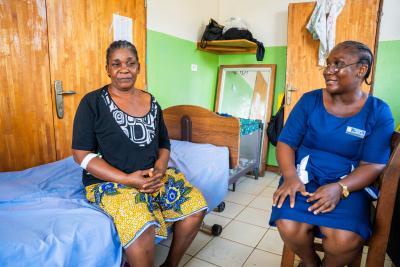
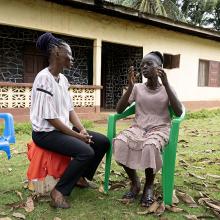
Annie Weah (right), the community midwife coordinator for Partners In Health (PIH), interprets from French to English during an interview with Jannet Blagnon (left), a 58-year-old widow and farmer from the Ivory Coast. This interview took place after Jannet underwent surgery at the PIH-supported James Jenkins Dossen (JJD) Memorial Hospital in Harper City, Maryland County. Photo by Sam Zota/PIH.
The hospital’s reach extends beyond Liberia. Jannet Blagnon, a 58-year-old widow and farmer from the Ivory Coast, described surgery in her home country as a luxury. Diagnosed with a prolapsed bladder, Jannet faced prohibitive costs of 500,000 CFA (~$877 USD) in her homeland. At JJD, she underwent a successful procedure on the same day as Decontee—November 13, 2025—without paying any fees. After struggling with sexual dysfunction, recurrent urinary tract infections, and kidney damage for over a year, Jannet’s life was forever changed.
PIH’s work at JJD Hospital exemplifies its mission to combat global health inequities and ensure that life-saving medical care is accessible to all. For patients like Decontee and Jannet, JJD Hospital is more than a facility—it’s a lifeline. As Decontee expressed, “I hope PIH continues its work in Liberia because they are really helping us.”