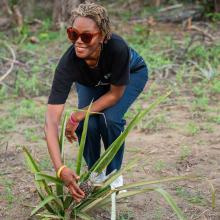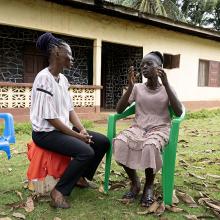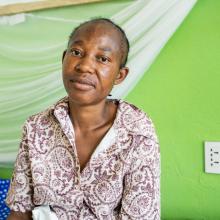
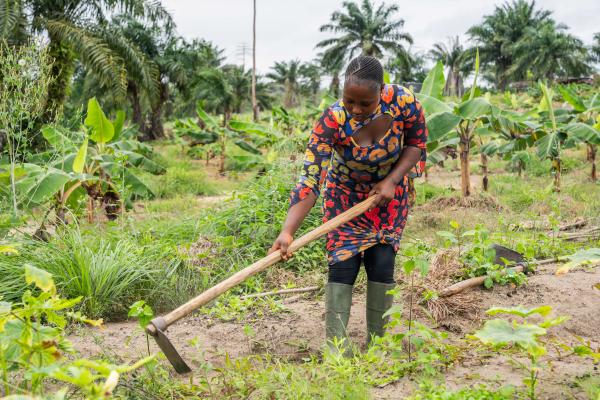
At 50 years old, Beatrice B. Howe wakes up early each morning to work at Polo Farm in the New Half Grayway Community. She shares that her earnings from the farm have enabled her to keep four of her children in school and support her family. Her older children have already graduated from high school. “This work na do well for me (This work has been very beneficial for me),” she says with a warm smile.
Beatrice’s story is one of many emerging from the Polo Farm—an initiative by Partners In Health Liberia (PIHL) that is transforming lives by addressing one of the most overlooked drivers of poor health outcomes: hunger.
Launched in October 2025, the Polo Farm is more than just an agricultural initiative; it is a direct response to the hidden disease of hunger and the rise of metabolic diseases. The farm achieves this by providing fresh vegetables, fruits, and food crops to patients at the James Jenkins Dossen (JJD) Memorial Hospital and other health facilities in the region.
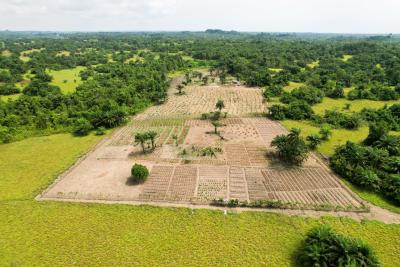
An aerial view of the Polo Farm Project in the New Half Grayway Community, Maryland County, Liberia. Photo by Ansumana O. Sesay / PIH.
At the same time, the farm is creating employment and skill-building opportunities for local farmers and the broader community. To date, Polo Farm has created over 200 short- and long-term job opportunities. Between October 2025 and March 2026 alone, the project harvested and distributed more than 2,400 kilograms of fresh produce, including cabbage, peppers, tomatoes, collard greens, cucumbers, okra, scarlet eggplant, watermelons, and lettuce.
Operations are intentionally community-driven. According to Delano Davis, PIHL Construction Projects Officer, the farm relies on a core team of just two agricultural technicians and about 12 rotational workers to manage daily operations. When the workload increases, the farm hires up to 20 additional community members on a rotating basis.
Women are the backbone of this effort, making up 56% of the workforce. This community-driven initiative is an innovative strategy that directly advances PIHL’s broader mission to strengthen the health system in Maryland County and improve patient outcomes.
Beyond learning new agricultural skills, the women working on the farm are significantly impacting the livelihoods of those around them. Margretta Wilson, a 33-year-old farm worker, uses her income to pay her children’s school fees and cover household bills, echoing the financial stability the farm provides.
Spanning eight acres, the pilot project is named in honor of PIH’s late co-founder, Dr. Paul Farmer. Beyond its immediate impact, the farm represents a long-term investment in local resilience—reducing reliance on imported vegetables, providing a sustainable source of income, and promoting local agricultural practices. As part of this long-term vision, crops such as pineapple, banana, papaya, citrus fruits, soursop, and avocados are already being cultivated.
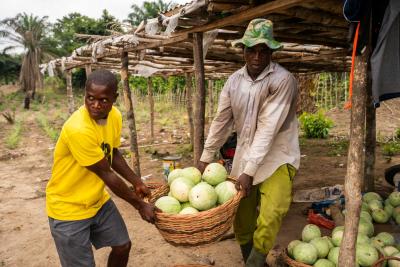
John N. Wilson (right) and Samuel S. Howe (left) are preparing the newly harvested watermelons and other crops from Polo Farm for distribution. Photo by Ansumana O. Sesay / PIH.
By linking agriculture, nutrition, and health care, Polo Farm is redefining what it means to deliver care in rural Liberia. It is not only feeding patients—it is empowering communities, creating opportunity, and building a healthier future from the ground up.