In an effort to enhance the diagnosis, prevention, and treatment of TB, Partners In Health (PIH) and the Government of Liberia, through the Ministry of Health, have launched a groundbreaking project to improve care for individuals with drug-resistant tuberculosis (DR-TB). The PIH and Unitaid Accelerating Regimens and Care for Drug-Resistant Tuberculosis (arcTB) project is being implemented in Montserrado and Maryland counties, which are heavily burdened by TB.
As part of the project rollout, PIH, in collaboration with the Ministry of Health, conducted a six-day intensive training for 129 Community Health Promoters (CHPs) in Montserrado County. The training aimed to increase their awareness of the World Health Organization (WHO)’s new 6-month all-oral regimen, BPaL/M, for DR-TB, which was informed by PIH-led research. The newly recommended six- to nine-month regimen of four all-oral drugs—bedaquiline, delamanid, linezolid, and clofazimine—is a ground-breaking shorter, safer, and more tolerable treatment option for the most resistant forms of TB, compared to the standard treatment that lasts up to 18 months and involves injectables with severe side effects.
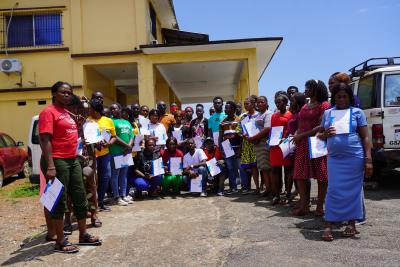
A group of Community Health Workers (CHWs) posed for photo after the arcTB Project’s DS/DR-TB signs and symptoms, treatment regimen, contact tracing, and accompaniment training in Monrovia. Photo by Aminata Massaley / PIH
CHPs play a vital role in Liberia’s healthcare system, delivering a wide range of primary healthcare services to communities and acting as a crucial link between households and formal health services. They extend primary care to remote areas through home visits, health education, and disease management for common illnesses like malaria, diarrhea, and pneumonia. The goal of the training was to enhance CHPs’ knowledge and practical skills in managing DR-TB in line with updated TB guidelines, which now include the new regimen. This training not only strengthened their technical expertise but also renewed our shared commitment to combat TB—one of Liberia’s leading causes of death. It equipped this critical cadre with practical tools and updated guidance to help identify, refer, and support TB cases across Montserrado.
During the training, Younger D. Mulbah, the National Desk Officer for Community Health Programs at the Ministry of Health, encouraged CHPs to visit their communities to identify TB cases and refer them to the TB-Annex Hospital or other treatment centers for care, using the knowledge gained throughout the training.
Equipped with practical skills to recognize the signs and symptoms of DR-TB, raise awareness of the new regimen, and master contact tracing, the CHPs are expected to significantly enhance communication between the communities they serve and the healthcare system.
“Since I started the training, I learned how TB can spread from one person to another, how to collect sputum, and I became familiar with Multidrug-resistant Tuberculosis (MDR-TB),” CHP Priscilla Nah stated.
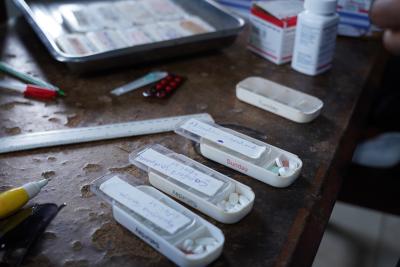
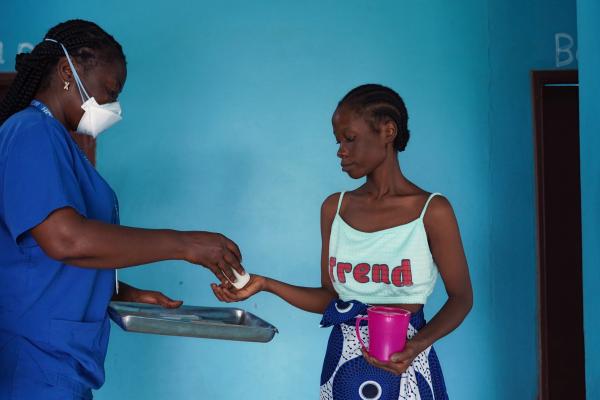
Partners In Health Liberia and Liberia’s Ministry of Health have started administering the new WHO approved BPaLM regimen, as display, for multidrug-resistant tuberculosis (MDR-TB) patients display at the TB-Annex Hospital in Montserrado County. Photo by Aminata Massaley / PIH
CHPs can identify DR-TB cases early, improve patients’ health outcomes, and reduce loss to follow-up within their communities. They often serve as the first point of contact for patients in remote areas.
During the training sessions, participants shared their experiences, challenges, and strategies for effectively managing DR-TB nationwide, particularly in Montserrado County, which bears 60% of the national TB burden, along with Maryland County. Liberia has a TB incidence rate of 308 cases per 100,000 population, placing it among the top 30 countries most affected by TB and TB/HIV co-infection.
Since the training, several patients have already been enrolled in the new treatment regimen, marking a considerable achievement in expanding access to shorter, higher-quality TB treatment in Liberia.
Over the next three years (2025-2027), the arcTB project seeks to enhance case detection, connect patients to preventive and curative services, and improve the quality and availability of treatment, especially among children and pregnant women in Montserrado and Maryland Counties, Liberia.