During a recent Policy & Partnerships Retreat, Dr. Odell Kumeh, the Director of the External Aid Coordination Unit at the Ministry of Health and former County Health Officer (CHO) of Maryland County, gave remarks. She emphasized that the partnership between Partners In Health (PIH) and the Liberian Ministry of Health is not just a collaboration; it is, in her words, “a covenant—a sacred commitment forged in a time of fire, a promise to walk together, no matter the challenge.”
This commitment is foundational to the organization’s historical model. It embodies the principle of accompaniment—standing in solidarity with governments and communities to strengthen local health systems over time, rather than offering short-term aid.
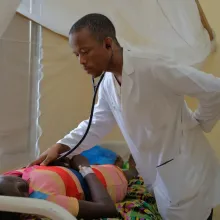
This partnership, Dr. Kumeh noted, has deeply impacted Liberia’s health care system, as evidenced by PIH’s life-saving initiatives. Speaking during a retreat organized by PIH’s Policy and Partnerships department, she highlighted PIH’s global legacy in addressing formidable health challenges from Multi-Drug-Resistant Tuberculosis (MDR-TB) in Peru to HIV in Rwanda, culminating in the establishment of the first and only decentralized MDR-TB treatment center at the James Jenkins Dossen (JJD) Memorial Hospital in Maryland County, rural Liberia.
“Complex, life-saving care is no longer a distant dream for our rural communities, but a tangible service delivered close to home,” she stated.
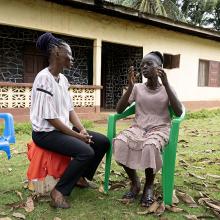
Dr. Kumeh elaborated on the accomplishments in Maryland County, where a robust community health workforce has been developed as the backbone of primary care. She also proudly mentioned the training of specialist physicians through the Family Medicine Residency program at JJD Hospital and ongoing partnerships with William V. S. Tubman University, which ensure that the “pipeline never runs dry.” “This is not a series of isolated projects; it is a comprehensive, homegrown ecosystem for health, built and led by Liberians for generations to come,” she asserted.
Reflection on the PIH and MOH Accompaniment Journey
Reflecting on the journey of accompaniment between PIH and the Ministry of Health, Dr. Kumeh recalled PIH’s arrival in Liberia during the peak of the Ebola crisis. The already fragile health system was further strained, and communities were engulfed in grief and mistrust.
“It was in this crucible that the PIH model was put to its most critical test in Liberia,” she reflected.
While PIH did not provide all the answers, she noted, it embodied a commitment to stand in solidarity with the Ministry of Health and to work alongside local health workers amid the daily struggle to reclaim life from death.
PIH’s program began in Liberia in October 2014, focusing on addressing the Ebola Virus Disease outbreak and supporting essential health services. After the outbreak was contained in 2015, the Ministry of Health asked PIH to help build a resilient health system to improve health for all Liberians, addressing both immediate and chronic challenges stemming from years of civil conflict.
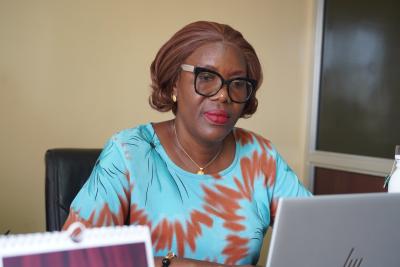
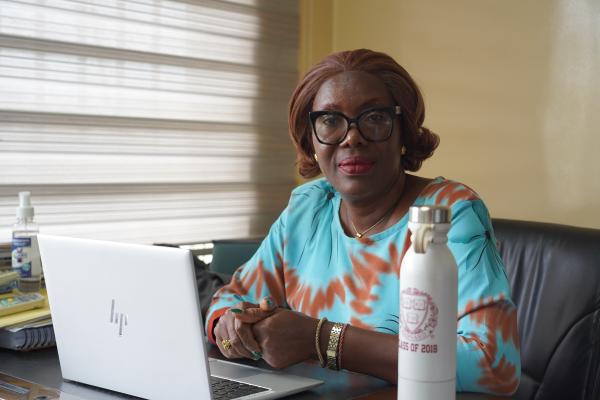
Dr. Odell Kumeh, Director of the External Aid Coordination Unit at the Ministry of Health and former County Health Officer of Maryland County. Photo by Aminta K. Massalay/PIH-L.
Dr. Kumeh noted that ongoing investments in future health leadership are a testament to the late Dr. Paul Farmer and the commitment of PIH leadership to their “lifelong mission,” which transcends immediate crises to address the long-term needs of the country. As a PIH-supported Harvard Medical School graduate, she shared her journey, inspired by Dr. Farmer, who viewed local health workers not merely as practitioners but as potential system builders.
Building Together through Partnership
Partners In Health Liberia (PIH-L) is dedicated to collaborating with the Ministry of Health, the Government of Liberia, and local communities to enhance access to, utilization of, and quality of health care. Dr. Kumeh highlighted the achievements of this partnership, including shifting from an emergency-response focus to building integrated primary care systems, strengthening the health workforce, and embedding equity and social justice in health policy.
“This progress is real. It is tangible. It is a direct result of a partnership built on the core PIH tenets of solidarity and accompaniment,” she emphasized.
Looking ahead, Dr. Kumeh advocates for deepening the partnership between PIH and the Government of Liberia to ensure policies facilitate skill transfer, build institutional capacity, and bolster Liberian leadership. “The investment in individual leaders must become a systemic, scalable standard. We must double down on building pipelines for the next generation of Liberian clinicians, policymakers, and public health leaders,” she remarked.
Deeply embedded in PIH-L’s strategy for health system strengthening is the intentional investment in local human capital to strengthen and stabilize the health system and to decentralize local leadership across the organization.
A prime example of this approach is PIH-L’s Director of Finance and Deputy Executive Director, J. Wilfred Zeon, a local Liberian who began his career as an Accountant Officer at PIH-L. Since then, Zeon has risen through the organization to occupy a strategic leadership role.
In addition, we have transferred more than seven managerial roles and three executive leadership roles from expatriates to local Liberians. We have supported more than 4 Liberian Ministry of Health staff members in pursuing master’s programs abroad, enabling them to return to the country with new skills. The examples of these investments are numerous and cross-cutting across the organization.
This strategy not only strengthens PIH-L’s leadership structure but also underscores the importance of developing local talent to ensure that the organization remains responsive to the needs of the communities it serves. Through these efforts, PIH-L is laying a strong foundation for resilient local leadership that reflects the rich value of Liberia’s workforce.